

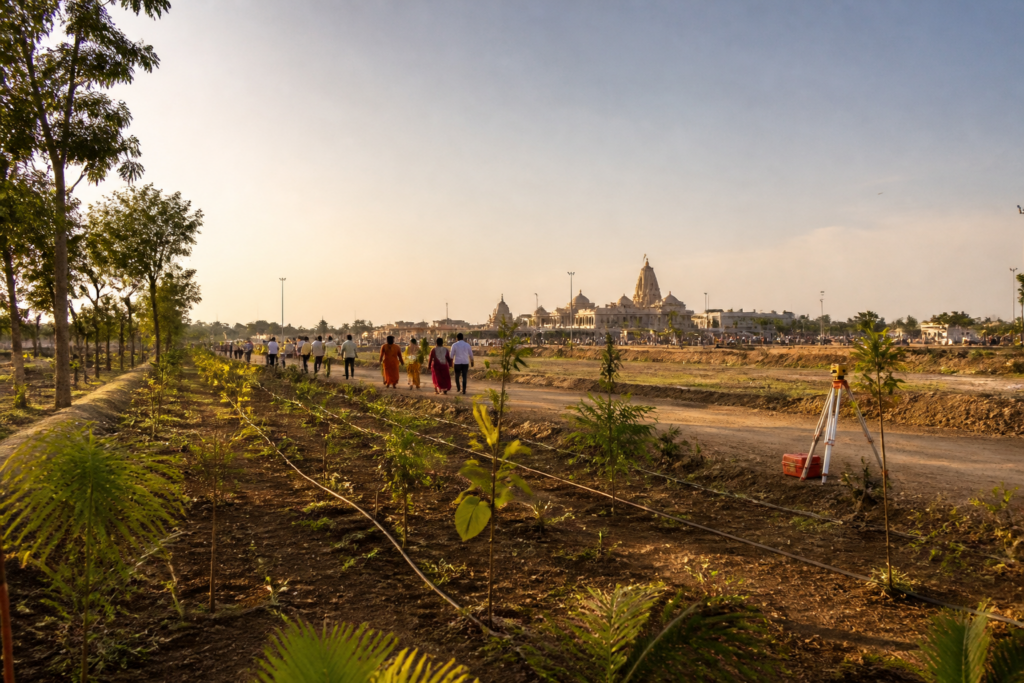
The Maharashtra cabinet has approved a pilgrimage site development project at Shegaon in Buldhana district, allowing construction across three hectares while requiring the remaining 15 hectares of the allotted land to be used exclusively for tree plantation.
The approval concerns land measuring 19 hectares that had been given to the Shri Sant Gajanan Maharaj Sansthan for tree plantation. The trust had submitted a proposal seeking permission to develop part of the land as a pilgrimage and tourist centre, according to a report by the Times of India.
The proposed facilities include a memorial centre, eco-tourism centre, Shanti Kutir, residential complex, auditorium, exhibition centre and open forum. The plan also includes a naturopathy centre, an ayurvedic research centre, a hospital and facilities for rural cottage industry.
The cabinet approved the proposal subject to the terms and conditions under Section 40 of the Maharashtra Land Revenue Code, 1966. The principal condition attached to the approval is that the balance 15 hectares must be used exclusively for tree plantation.
The decision places the proposed pilgrimage infrastructure within a land-use framework that separates the construction area from the plantation area. The approved construction footprint represents three hectares of the 19-hectare parcel, while the plantation requirement covers the remaining land.
The proposal forms part of the state government’s continuing effort to develop religious sites as tourist centres. At Shegaon, the approved project combines religious, visitor, healthcare, research, accommodation and livelihood-related facilities in a single proposed site.
The Shri Sant Gajanan Maharaj Sansthan’s proposal includes both built infrastructure and facilities linked to ecology and local economic activity. The eco-tourism centre and the plantation condition are included alongside the memorial, visitor and institutional facilities proposed by the trust.
The cabinet’s approval does not remove the conditions attached under the Maharashtra Land Revenue Code. The next stage of the project will therefore remain subject to compliance with the terms governing the use of the three-hectare development area and the exclusive plantation use of the remaining 15 hectares.


