

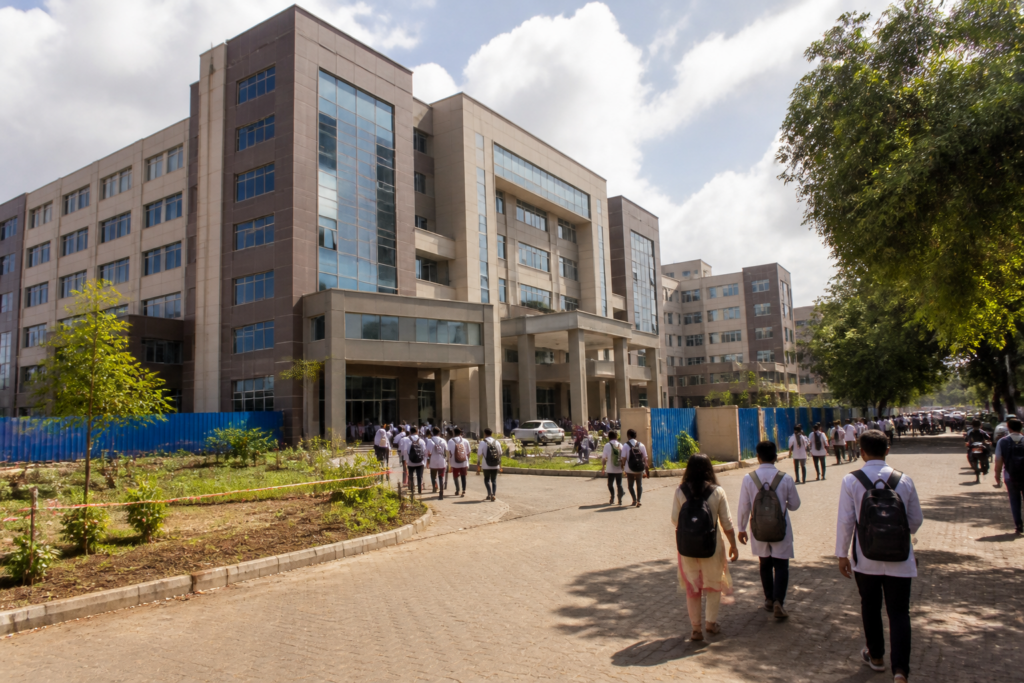
Pune will get a new ESIC medical college with 50 MBBS seats at the Employees’ State Insurance Corporation hospital in Bibwewadi, with admissions expected to begin from the 2027-28 academic year, Chief Minister Devendra Fadnavis said on October 14.
The approval was granted by the Union Ministry of Health and Family Welfare, according to Fadnavis. The proposed college will be established at the existing ESIC Hospital in Bibwewadi, adding another medical education institution and a fresh pool of undergraduate medical seats in Pune.
Fadnavis said the approval followed an appeal after the proposal had been rejected twice earlier. He described the decision as significant for Maharashtra and Pune while speaking to reporters after a meeting of BJP councillors. The meeting was held against the backdrop of elections to the Pune division graduates’ and teachers’ constituencies of the Maharashtra Legislative Council.
The college is scheduled to become operational from the 2027-28 academic year. The initial intake will be limited to 50 MBBS students, according to the information shared by the chief minister. The report did not provide details on the institution’s construction schedule, faculty appointments, hospital bed capacity, clinical training arrangements or the process through which admissions will be conducted.
The new institution will be located within the ESIC healthcare network, which serves insured workers and their dependants. Its academic and clinical functioning will therefore depend on the readiness of the Bibwewadi hospital and the fulfilment of regulatory requirements for medical education. The source report did not specify whether any expansion of hospital facilities is planned before the first batch is admitted.
For Pune, the approval expands the city’s medical education landscape, but the immediate benefit will be limited to the number of seats formally announced. The college’s eventual contribution to healthcare delivery will depend on the availability of teaching staff, laboratories, clinical departments and other facilities required to train medical students. These operational details were not included in the announcement.
The approval also comes after two unsuccessful attempts, making the appeal process central to the project’s clearance. Fadnavis did not disclose the reasons for the earlier rejections or identify the changes that led to the subsequent approval.
The next formal milestone is the proposed start of admissions in the 2027-28 academic year. Further details on infrastructure, regulatory compliance, faculty recruitment and the admission process are awaited.


