

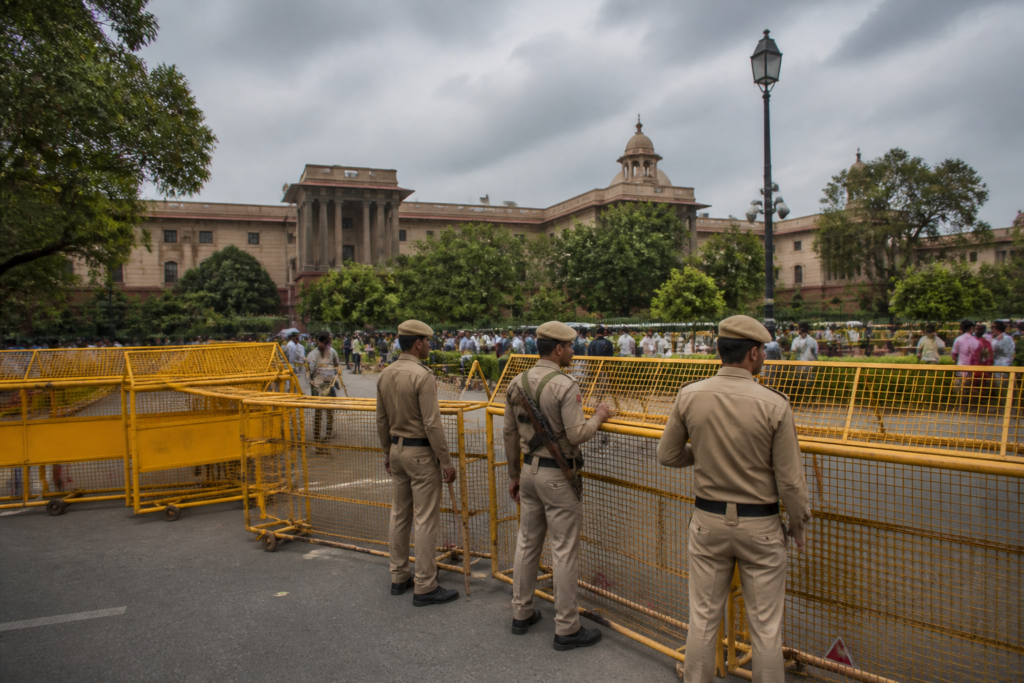
Two members of the Cockroach Janta Party, Saurav Das and Ashutosh Ranka, have been sent to Tihar Jail for five days in judicial custody after their alleged entry into the Jantar Mantar area and confrontation with security personnel, with jail officials placing them in separate barracks for security reasons.
Das has been lodged in Jail Number 2 and Ranka in Jail Number 4, according to senior Tihar officials. The two were arrested on 13 October after Delhi Police alleged that they entered Jantar Mantar through a private premises despite the site having been removed from the designated protest venue list.
Police said Das, Ranka, Ajinkya Shinde and 11 other CJP members reached the area early on 13 October. Security personnel allegedly attempted to stop them, but the protesters obstructed officials in the performance of their duties. All 14 people were detained, according to the report.
The case has brought the regulation of public demonstrations in central Delhi back into focus. Jantar Mantar has traditionally been associated with protests, but authorities recently removed it from the list of approved demonstration sites. Police said the action against the three named individuals was taken in view of alleged attempts to disturb public peace, violate the law and encourage others to participate in similar activities through social media.
Two first information reports were registered on 13 October. The FIR at Connaught Place police station invokes Bharatiya Nyaya Sanhita sections 223(a), relating to disobedience of an order issued by a public servant; 332, relating to unauthorised entry into a building or premises with an intention to commit an offence; and 61(2), relating to criminal conspiracy. Another FIR at Parliament Street police station invokes sections 221, 115(2), 132, 121(1) and 3(5), concerning obstruction of a public servant, alleged injury, use of force to prevent official duty, and common intention. Police said sections 332, 132 and 121(1) are non-bailable.
The three accused were produced before a special executive magistrate, where proceedings were initiated under sections 126 and 170 of the Bharatiya Nagarik Suraksha Sanhita. Police cited a preventive report, alleged repeated violations of the law and the possibility of further violations or attempts to influence others while seeking action against them. The magistrate sent Das and Ranka to five days of judicial custody.
Shinde was released on a personal bond and a bail amount of Rs 5,000, subject to conditions that he maintain peace and good behaviour for six months. The report also stated that Das and Ranka had previously been taken into custody on a Saturday and had signed bonds undertaking to maintain peace for one year.
CJP founder Abhijit Deepke criticised the action in a post on X, asking why the two members had been sent to judicial custody and alleging that their offence was connected to unfurling the national flag at Jantar Mantar. The police and court proceedings cited in the report concern the alleged obstruction of officials, unauthorised entry, public-order violations and related offences. The five-day judicial custody period will determine the immediate next stage of proceedings.


