

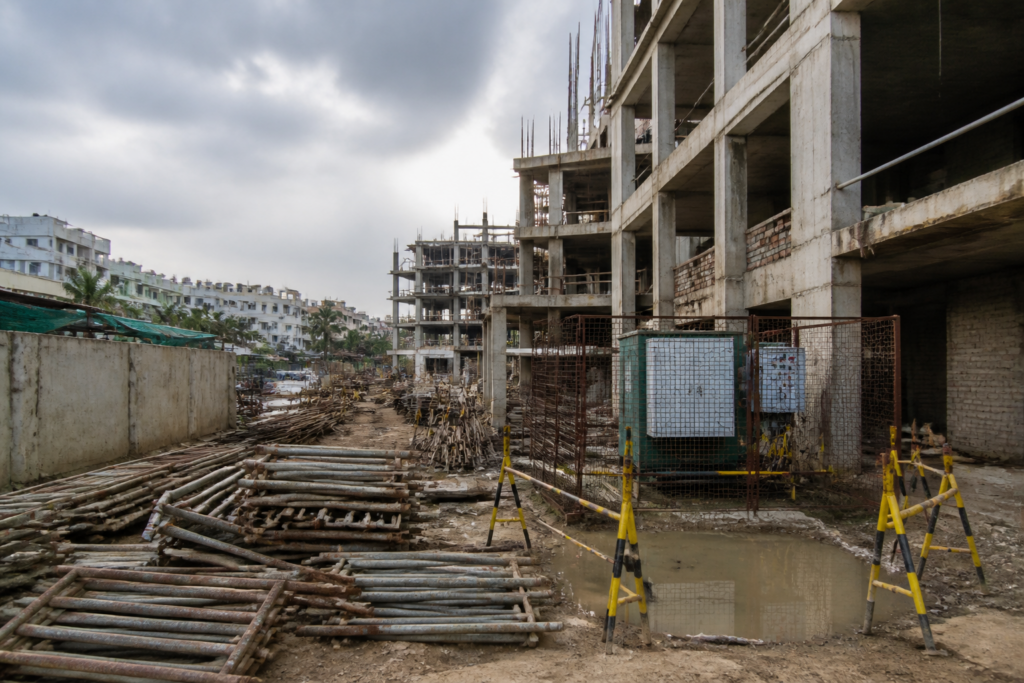
The death of a 16-year-old worker after he allegedly came into contact with an exposed electrical wire at a construction site in Ahmedabad’s Jagatpur area has brought two workplace risks into the same frame: unsafe site management and the presence of a minor in construction labour. Chandkheda police have registered a complaint against the site’s contractor and supervisor, according to a report by Divya Bhaskar – Ahmedabad.
The incident reportedly took place on October 11 at the Blue Well construction site near Jagatpur Crossroads. The deceased, identified as Sachin Garasiya, had gone to the site with his elder brother, Mism Garasiya, to undertake daily-wage work. The report says the brothers travelled from the Ghatalodia area to a local labour point before going to the site.
According to the complaint described in the report, Mism was assigned plastering work while Sachin was asked to carry iron supports, locally referred to in the report as “palak” work. Sachin was reportedly carrying an iron support with another young worker when he came into contact with a wire connected to an electrical switchboard. The wire was allegedly exposed and water had accumulated nearby.
The combination described in the account is important because it shows how construction-site risks are often created not by a single event but by the interaction of ordinary site conditions. An exposed electrical connection becomes more dangerous when water is present. The danger increases further when workers are moving metal objects through the same area. The report does not provide an independent technical assessment of the wiring, the water accumulation or the site’s electrical arrangements, but these are central details in the police complaint.
Sachin reportedly fell after receiving the electric shock and was taken to hospital for treatment. He later died during treatment. The account does not specify the hospital, the time between the accident and his death, or whether a post-mortem examination was conducted. Those details would be relevant to establishing the precise medical and investigative record of the case.
The police complaint names contractor Kanti Mistry and supervisor Nanji Solanki. It alleges that workers were made to work without safety equipment. The supplied report does not state whether the police have arrested the accused, whether statements have been recorded from other workers, or which specific legal provisions have been applied. It also does not include a response from the contractor, supervisor, site owner or project developer.
That information gap matters because responsibility at a construction site is usually distributed across several levels. A contractor may control labour deployment and daily site operations, while a supervisor may direct workers and manage immediate tasks. The project owner or developer may have contractual, regulatory or oversight responsibilities, depending on the nature of the project and the arrangements in place. The available report identifies the contractor and supervisor named in the complaint, but it does not establish the full chain of responsibility.
The incident also raises a separate question about the employment of a minor. The report identifies Sachin as 16 years old and says he was carrying iron supports at the site. It does not establish how he was recruited, whether his age was verified before deployment, who paid him, whether he was working through a labour intermediary, or whether other minors were present. These questions are not peripheral to the case. They determine whether the death was an isolated safety failure or part of a wider labour-management problem at the site.
The presence of the two brothers at a daily-wage labour point suggests a system in which construction workers may be hired informally for specific tasks and individual days. However, the supplied report does not provide enough evidence to describe the labour arrangement beyond the family’s account. It does not say whether the site maintained attendance records, worker identity documents, safety inductions or age records. These documents, if available to investigators, could help clarify how the teenager entered the site and whether site managers knew his age.
The report’s account places the incident within a functioning urban construction environment rather than an abandoned or informal structure. A commercial construction site was operating near a major local junction, workers were assigned distinct tasks, and electrical infrastructure was being used alongside construction activity. The basic governance question is therefore not whether construction can involve hazards. It is whether those hazards were identified, isolated and controlled before workers were asked to move through the site.
Electrical safety is particularly dependent on basic separation and inspection. Wiring, switchboards, water and metal materials should not be allowed to create an uncontrolled path for current in an active work area. The supplied material does not document whether the wire was temporary or permanent, whether it had been reported previously, or whether an electrical contractor had inspected it. It does establish that the police complaint attributes the death to contact with an exposed wire and alleges a lack of safety equipment.
Safety equipment alone would not answer every risk described in the report. Protective footwear or other equipment may reduce exposure in some circumstances, but equipment cannot substitute for isolating a live wire, keeping electrical points away from water and controlling access to hazardous areas. The available account does not say what equipment, if any, was provided or whether the teenager had received instructions before being assigned the task.
The case therefore requires attention to both immediate site conditions and the administrative records behind them. A police investigation can establish the sequence of events, identify witnesses and examine the alleged negligence. A broader labour and workplace-safety inquiry would need to determine how workers were recruited, whether safety procedures existed, who supervised the electrical arrangements and whether the site had complied with applicable requirements. The supplied report does not indicate whether such a separate inquiry has begun.
The limits of the available evidence should also be kept clear. The central account comes from a complaint filed by Mism Garasiya, as reported by Divya Bhaskar – Ahmedabad. The report records the police case against the contractor and supervisor, but registration of a complaint is not a finding of guilt. The contractor and supervisor have not been quoted in the supplied material, and no official police statement, inspection report or court document is included.
What is established is narrower but serious: a 16-year-old who was reportedly working at a Jagatpur construction site suffered an electric shock after stepping on or coming into contact with an exposed wire near water, was taken to hospital and died during treatment. A complaint was registered against the named contractor and supervisor over alleged negligence and the absence of safety equipment.
The larger urban question is how a city’s construction activity records and manages the people who build it. The case connects physical infrastructure, labour access and municipal accountability at the level of a single worksite. The next meaningful developments are the police investigation, the findings on the electrical installation, clarification of the teenager’s employment arrangements and any response from the accused or the authorities responsible for workplace oversight.


