

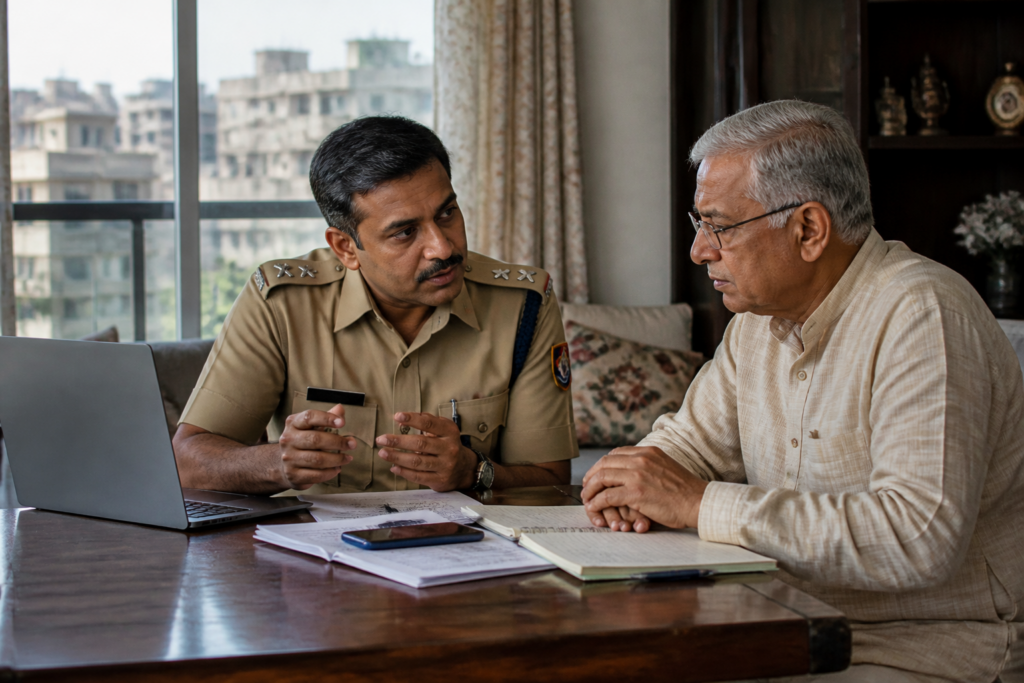
Delhi police are facing a growing challenge in protecting elderly residents from cyber-fraud schemes in which callers impersonate the Reserve Bank of India, threaten arrests or property seizure, and pressure victims to transfer large sums of money, according to a report by Jagran. In several cases, officers have had to first convince victims that they are being cheated before they could record complaints or stop the transfers.
The cases involve elderly residents who were allegedly manipulated through investment promises, digital-arrest threats and fabricated criminal investigations. A police official cited in the report said fraudsters psychologically condition victims to such an extent that they stop trusting police warnings and refuse to speak to investigators or family members.
In one case, an investigation by Tamil Nadu cyber police into a fraud network led to the identification of a bank account in Shahdara around two months ago. Delhi police traced the account to a 70-year-old retired chief engineer living in Dwarka. Officers contacted him after suspecting that he had been defrauded and advised him to withdraw his investment. He reportedly said that he had invested in the American stock market and refused both to withdraw the money and to file a complaint, citing a fall in the market.
Another case came to light after a bank informed police that a woman had been depositing between Rs 5 lakh and Rs 6 lakh into different accounts every day for two consecutive days. When officers reached her, she refused to speak, saying that she was depositing money into an Income Tax Department account and had been instructed not to talk to anyone. Police later found that fraudsters had allegedly placed her under a digital arrest by threatening property confiscation and arrest. They also threatened to arrest her son. The woman agreed to file a complaint only after police brought her son from Bengaluru and explained the fraud.
In a third case, a bank alerted police after an elderly woman issued a cheque for nearly Rs 1 crore to transfer money into another account. She lived alone, while both her daughters were abroad. The money had entered her account after she sold land a few months earlier. When she refused to speak to officers, police contacted one of her daughters, following which she agreed to approach the cyber police station. The intervention prevented the transfer, the report said.
Investigators later found that callers had allegedly posed as RBI officials and claimed that the woman’s account contained money linked to drug trafficking. She was told to transfer the entire amount to an RBI account for investigation. The callers allegedly promised to return the money with interest after 48 hours and threatened to seize it if she refused.
The cases show how banks and police are increasingly becoming the first line of intervention when elderly customers make unusual high-value transfers. They also underline the difficulty of responding after a victim has been isolated from relatives and convinced that any disclosure could lead to arrest or financial loss. The Delhi police response in these cases involved bank alerts, direct contact with account holders and assistance from family members. The report did not provide figures for the total number of such cases or the amount lost across Delhi. Police action and bank monitoring remain central to preventing further transfers in the reported cases.


