

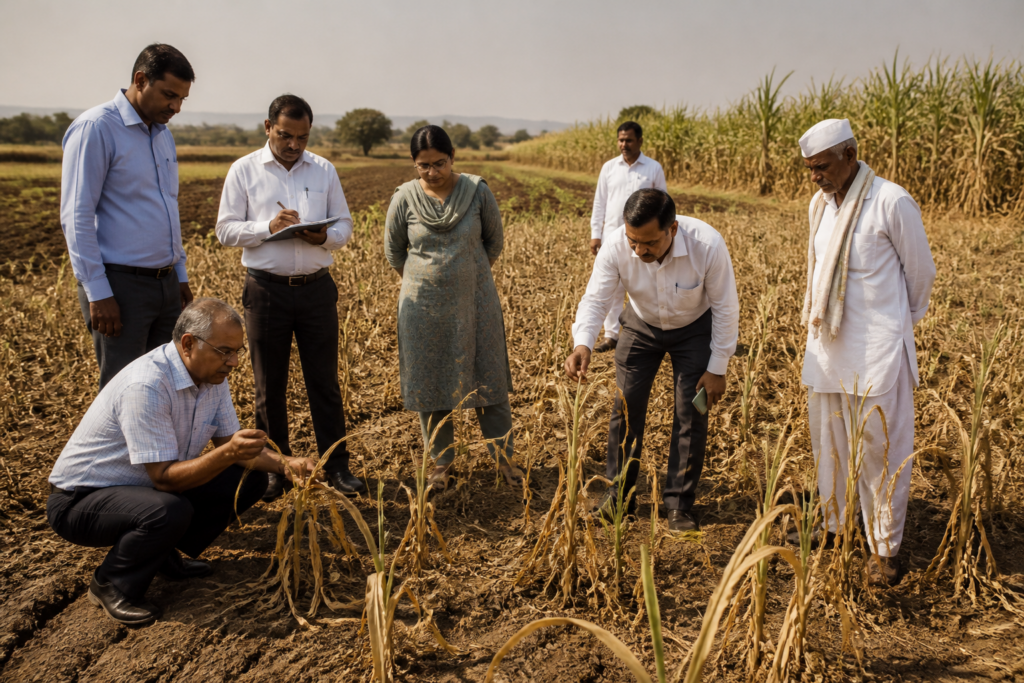
Pune crop damage assessment has been completed across 1,39,077.19 hectares in eight drought-affected talukas, with losses recorded for 2,37,382 account holders, according to the district agriculture administration. Officials are also being asked to consider damage that standing crops could suffer before the assessment process is completed.
The assessment is under way in Baramati, Shirur, Daund, Indapur, Purandar, Khed, Bhor and Rajgad following a prolonged break in rainfall. Joint teams from the revenue, agriculture and rural development departments are conducting field-level inspections and recording crop conditions farm by farm.
The eight talukas together have 3,71,235 hectares classified as affected. Assessments have been completed in 1,042 villages so far, with the completed area accounting for a substantial portion of the affected land. The taluka-wise figures supplied by the district administration show the highest completed assessment area in Purandar, at 35,574 hectares, followed by Indapur at 28,686 hectares, Khed at 24,120 hectares and Daund at 22,635 hectares.
The administration’s decision to consider possible future losses is linked to the rise in temperatures during the October heat. Temperatures in some parts of the district have reached between 40 and 42 degrees Celsius, according to the report. Officials said the condition of crops visible during a field inspection may change over the following days or weeks as high temperatures continue.
Sugarcane awaiting crushing is a particular concern. The report said crushing may take between 15 days and two months, during which the crop could be exposed to additional heat-related stress. Officials are therefore considering whether the condition of standing crops is likely to remain unchanged until crushing, rather than recording only the damage visible on the day of inspection.
Vaibhav Tambe, Pune district superintendent agriculture officer, said assessments should be conducted properly in view of the possibility of further crop damage caused by rising temperatures. He said farmers could contact the village revenue officer, agriculture assistant or village development officer to have their losses recorded.
The agriculture department has also initiated village-level communication to prevent farmers from being left out of the process. Written notices have been placed on gram panchayat noticeboards because some farmers live in hamlets and settlements away from the main villages, while others may be away for work. Officials have instructed the relevant machinery to ensure that no affected farmer is excluded from the assessment.
The completed assessment figures remain subject to the continuation of the field survey across the affected area. The next administrative step is to complete the remaining inspections and consolidate the damage records, including potential losses identified before crops are harvested or sent for crushing.


