

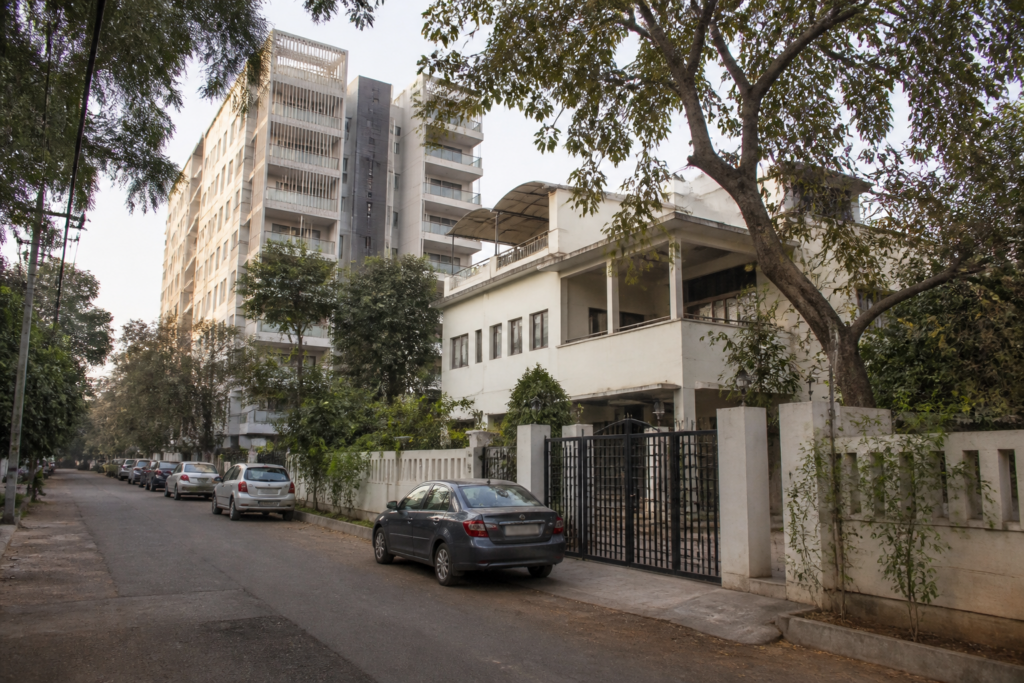
The registration of seven Hyderabad properties auctioned for approximately Rs 15.03 crore marks an important stage in the long-running Nowhera Shaik and Heera Group case: urban assets attached during a money-laundering investigation are being converted into sale proceeds intended for restitution to genuine claimants and victims. The transaction also shows how courts, enforcement agencies and the land-registration system interact when disputed property becomes part of a recovery process.
The properties include six flats at HS Royal in Shaikpet Village and a house in MLA Colony on Road No. 12, Banjara Hills. According to the Directorate of Enforcement (ED), Hyderabad Zonal Office, the sale deeds were registered in favour of the successful H-1 bidders on October 6, 2026. The auction was conducted pursuant to directions issued by the Supreme Court.
The immediate event is therefore not simply a property sale. It is the completion of a court-enabled transfer involving assets that had been attached under the Prevention of Money Laundering Act, 2002. The registration of the sale deeds gives the successful bidders formal ownership through a process in which the Supreme Court also addressed who could execute the documents on behalf of the petitioner-accused.
The Supreme Court’s March 5, 2025 order allowed the ED to auction immovable properties attached in the case. The stated purpose was to maximise realisation from those assets for restitution to genuine claimants or victims. In a subsequent order dated July 27, 2026, the court directed the Registrar General of the High Court for the State of Telangana to deputise T. Venkateshwar Rao, Registrar (Protocol), for execution of the sale deeds on behalf of the petitioner-accused.
That sequence matters because attached urban property cannot be treated as an ordinary market transaction. The assets are located in established Hyderabad neighbourhoods and consist of residential units rather than abstract financial holdings. Their transfer required a judicial framework, an authorised signatory and registration through the formal property system. The process illustrates the administrative chain between enforcement action, court permission, auction, execution of sale documents and final registration.
The ED said its investigation was initiated under the PMLA after multiple first information reports were registered by police authorities in different states against Nowhera Shaik, Heera Group of Companies and others. The investigation, as described by the agency and reported by Deccan Chronicle, found that more than Rs 5.978 crore had been collected from members of the public with promises of returns exceeding 36 per cent a year.
The agency further stated that the entities later defaulted on repayment of principal amounts and promised returns to a large number of investors. It alleged that part of the proceeds generated through the scheme was used to acquire movable and immovable properties in the names of Nowhera Shaik, Heera Group entities, relatives and associates.
The scale of the attached-property process is substantially larger than the latest auction. During its investigation, the ED issued five Provisional Attachment Orders covering properties valued at Rs 428.83 crore under the PMLA. The seven properties now registered for approximately Rs 15.03 crore represent one realised portion of that broader pool of attached assets, not the conclusion of every recovery or legal proceeding connected to the case.
This distinction is important for understanding the institutional mechanics. An attachment prevents the disposal or transfer of identified property while proceedings continue, but it does not by itself place money in the hands of claimants. A court-authorised auction creates the possibility of monetising the asset. Registration then completes the transfer to the successful bidder. Only after the relevant legal and administrative steps can the proceeds become part of a restitution process.
The case also highlights the particular role of urban real estate in financial investigations. Residential flats and houses are identifiable, registrable assets with a market value, but their value is shaped by location, title, legal status and buyer confidence. The ED’s announcement confirms the auction consideration and the locations of the properties, but the supplied material does not provide reserve prices, bidder identities, individual sale values, valuation methods or the schedule for distributing the proceeds among claimants.
Those missing details are not minor in a restitution process. The total amount realised from the seven properties is clear, but the source material does not establish how the proceeds will be allocated, when eligible claimants will receive money or how the recovery will be reconciled with the total value of alleged investor losses. It also does not state whether the remaining attached properties have been auctioned, are awaiting sale or remain subject to separate proceedings.
The institutional arrangement is spread across several bodies. The ED investigated the alleged proceeds of crime and issued the provisional attachment orders. The Supreme Court permitted the auction and later directed the deputation of an official for execution of the sale deeds. The Registrar General of the Telangana High Court was involved in implementing that direction, while the property registrations completed the formal transfer to the bidders. The Special Court under the PMLA is handling the prosecution complaints filed by the agency.
This division of responsibility reveals why recovery through seized property is administratively complex. Enforcement agencies identify and attach assets, courts determine whether monetisation can proceed, designated officials execute documents, and registration authorities record the resulting transfer. Each stage addresses a different legal or administrative requirement. A delay at any point can keep property unavailable for both the original holder and potential beneficiaries.
For Hyderabad’s built environment, the case is a reminder that property markets can become part of wider governance and justice systems. The flats at HS Royal and the house in Banjara Hills are not only real estate holdings; they are assets whose ownership and proceeds are being managed through a court-supervised process. Their eventual transfer changes the legal status of specific properties while also creating a financial trail connected to alleged losses suffered by investors.
The available figures show three different scales within the case: more than Rs 5.978 crore allegedly collected from the public, five attachment orders covering properties valued at Rs 428.83 crore, and approximately Rs 15.03 crore realised through the latest seven-property auction. These numbers cannot be treated as interchangeable. The first concerns alleged collections described in the investigation, the second concerns the value of attached property, and the third concerns the consideration received in one completed auction.
The central fact established by the latest development is that seven sale deeds have been registered in favour of successful bidders following a Supreme Court-directed auction. The source does not establish the final restitution timeline, the full recovery amount, the status of all attached assets or the distribution formula for victims. Those are the next points that will determine whether the completed property transfer translates into actual recovery for eligible claimants.
The ED has filed a prosecution complaint and a supplementary prosecution complaint before the Special Court under the PMLA in Hyderabad. The continuing court process, the handling of the remaining attached properties and the eventual accounting of auction proceeds will therefore remain important milestones in assessing the broader recovery effort.


