

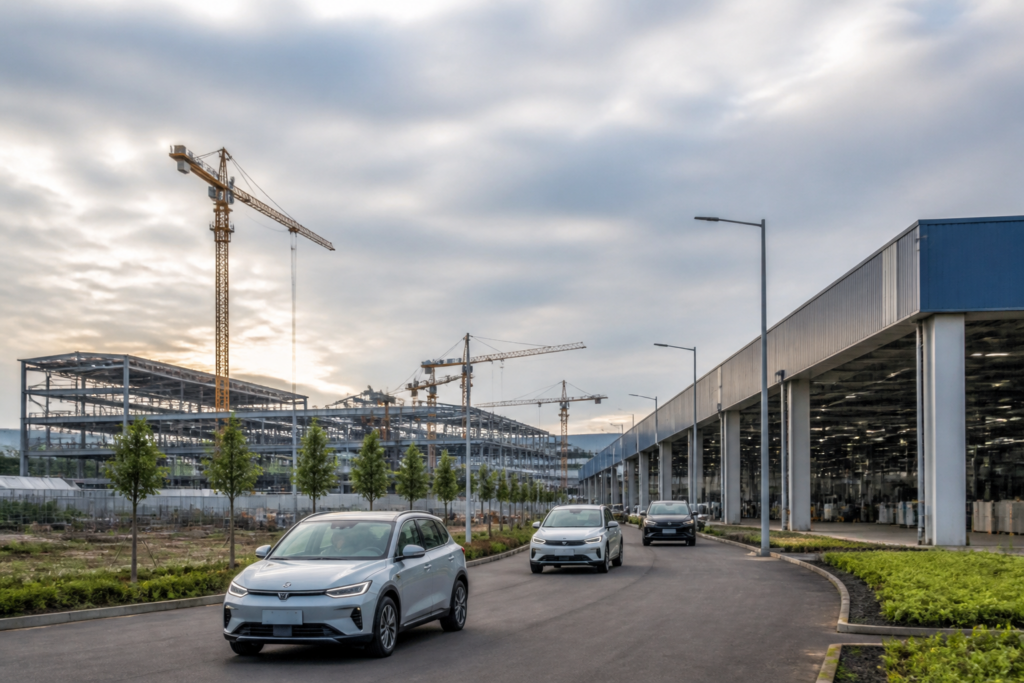
Hyundai Motor Company plans to regain India’s second-largest passenger vehicle market position by 2028-29, with expanded production at its Pune plant, 26 new models and increased investment in electric vehicles, localisation and research and development.
Global president and chief executive officer José Muñoz said the newly inaugurated Pune facility would be central to the company’s effort to recover market share. Hyundai has slipped to fourth position in India’s passenger vehicle market.
“Regaining the position will depend on production. This factory will help us increase output, and once its capacity rises to 320,000 units, I think we can get there by 2028-29,” Muñoz said at the inauguration of the Pune plant on Wednesday, according to Business Standard.
Hyundai Motor India currently has an installed annual production capacity of 170,000 units at the Talegaon facility in Maharashtra. The company plans to expand that capacity in phases to 320,000 units by 2030. Along with its Chennai operations, Hyundai’s total annual manufacturing capacity in India is expected to reach nearly 1.14 million units by 2030.
The capacity increase is being paired with a new-product programme. Hyundai plans to introduce 26 models, including four electric vehicles, by 2029. The company is also preparing to launch hybrid models and aims to make 50 per cent of its portfolio sustainable by 2030.
The expansion is part of a broader investment plan by Hyundai Motor Group. The group announced investments of $15.5 billion in India between 2026 and 2032, covering manufacturing, research and development, localisation, technology and emerging mobility businesses. The announcement followed a meeting between group executive chair Euisun Chung and Prime Minister Narendra Modi in New Delhi.
The investment will cover capacity expansion at Hyundai Motor India and Kia India, as well as technology and the wider automotive ecosystem. Company officials said about 60 per cent of the planned investment would be directed towards production, 20 per cent towards new technologies, including artificial intelligence and startups, and the remaining 20 per cent towards research and development.
Hyundai also plans to invest around $700 million in its Indian research and development centre. The investment will include a vehicle testing track and is intended to strengthen local engineering and product-development capabilities. A dedicated investment entity will coordinate spending across research and development, future technologies and the automotive ecosystem.
For Maharashtra, the Talegaon expansion places additional manufacturing capacity at the centre of Hyundai’s production strategy. The company’s stated objective is not limited to increasing output: Muñoz said product quality and competitiveness would remain primary priorities as Hyundai seeks to regain market share. The next major implementation milestone is the phased expansion of the Pune facility towards its planned 320,000-unit annual capacity by 2030.


