

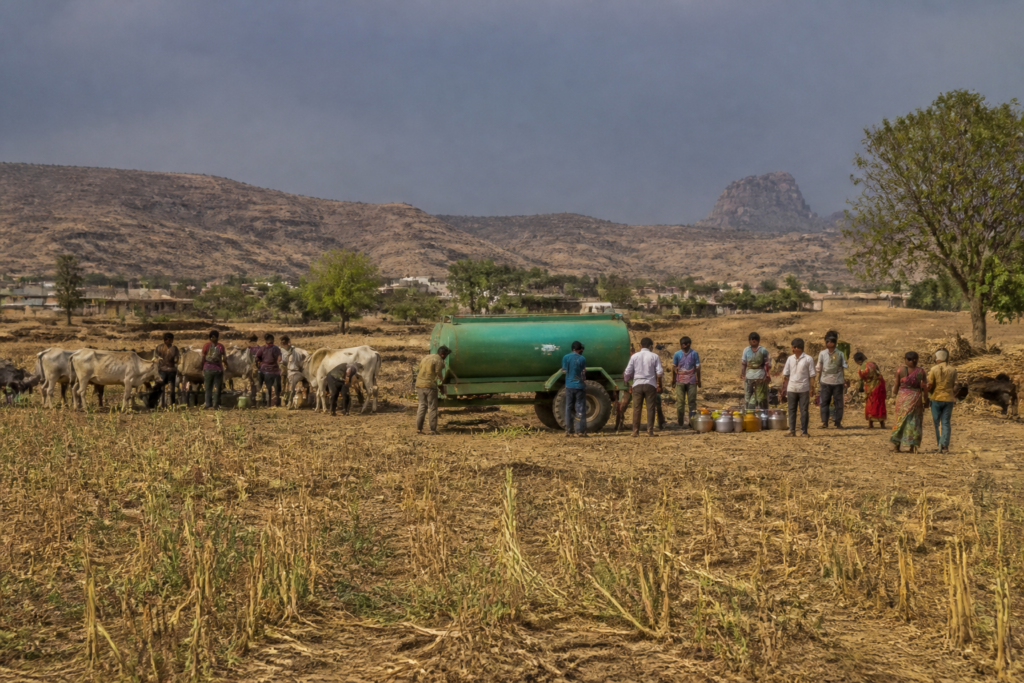
Ambegaon and Junnar in Pune district have been declared drought-affected talukas after crop losses, drinking-water stress and fodder shortages during the kharif season, bringing the number of drought-hit talukas in Maharashtra to 305.
The state government’s Relief and Rehabilitation Department issued the decision on October 14, according to a report by Sakal – Pune. The two talukas were not included in the list of 265 drought-affected talukas announced on September 25.
The inclusion follows a campaign by former Maharashtra Legislative Assembly Speaker and MLA Dilip Walse Patil, who inspected tribal, hilly and water-scarce areas in Ambegaon and Junnar after the initial list was released. He visited farms and met affected residents to assess the impact of the rainfall gap and crop damage.
Walse Patil also wrote to Deputy Chief Minister Sunetra Pawar and Agriculture Minister Dattatraya Bharane on October 6, seeking drought status for both talukas. The latest government decision means that residents in the affected areas will become eligible for a package of relief measures covering agriculture, water supply, power, education and employment.
The measures include a waiver on land revenue, restructuring of crop loans and a suspension of recovery of loans linked to agriculture. Farmers will also receive concessions on current electricity bills for agricultural pumps, while power connections to agricultural pumps in water-scarce villages will not be disconnected.
Students in schools and colleges will receive an exemption from examination fees. The government has also directed that employment works under the Mahatma Gandhi National Rural Employment Guarantee scheme be accelerated and that norms for such works be relaxed where required.
The drought declaration also provides for drinking-water supply through tankers wherever necessary, arrangements for fodder for livestock and measures to ensure that farmers and agricultural labourers do not face shortages of foodgrains. Water conservation works are to be started on an urgent basis, alongside planning for drinking-water supply.
District collectors have been instructed to conduct crop-loss assessments using GPS and photographs. These assessments will form the basis for further action on compensation. The report said a separate government decision on compensation would be issued soon.
The relief package places responsibility on district and local administrations to translate the drought declaration into actual support, including tanker operations, fodder availability, electricity continuity and employment works. The next formal step is the issuance of the separate decision on compensation after the crop-loss assessments are completed.


