

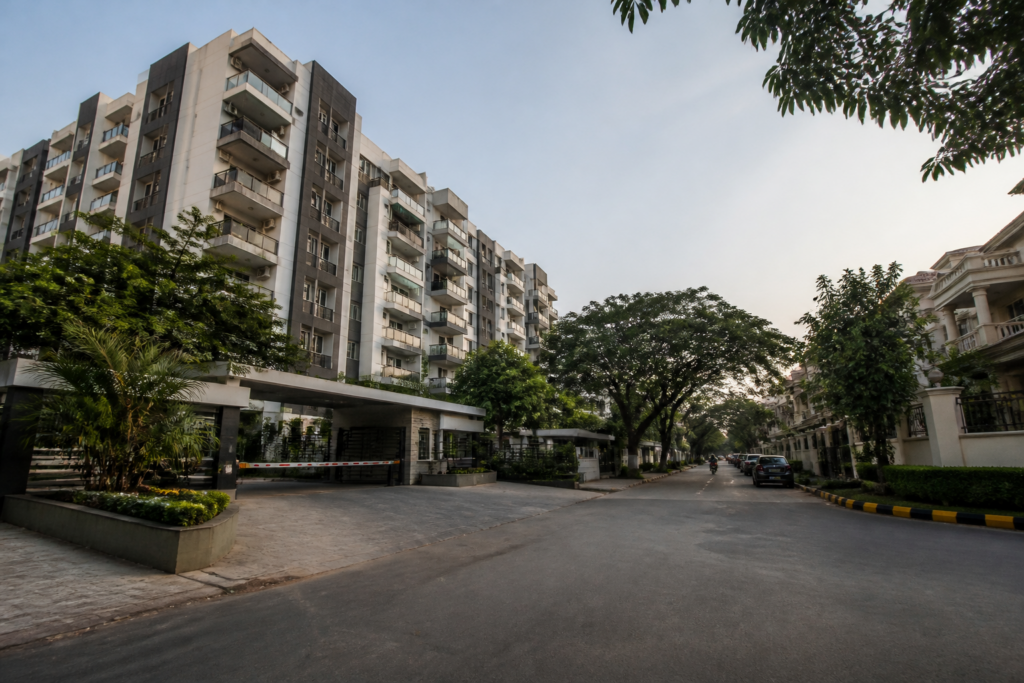
The registration of seven Hyderabad properties auctioned for approximately Rs. 15.03 crore marks a significant operational step in the long-running Nowhera Shaik case. The transaction shows how immovable assets attached during a money-laundering investigation can move from legal custody to sale, while also placing the courts, the Enforcement Directorate (ED) and the property-registration system at the centre of a restitution process.
The properties include six flats at HS Royal in Shaikpet Village and a house in MLA Colony on Road No. 12 in Banjara Hills. According to the ED, the sale deeds were registered in favour of successful H-1 bidders on October 6, 2026. The auction was conducted pursuant to directions issued by the Supreme Court, which had permitted the sale of attached properties with the stated objective of maximising realisation for genuine claimants or victims.
The significance of the registration is administrative as much as financial. An auction does not by itself complete the transfer of an immovable property. The successful bids must be converted into legally registered sale deeds, with an authorised party executing the documents. In this case, the Supreme Court directed the Registrar General of the High Court for the State of Telangana to depute T. Venkateshwar Rao, Registrar (Protocol), to execute the sale deeds on behalf of the petitioner-accused. The ED said the deeds for all seven properties have now been duly registered.
That arrangement reflects the institutional complexity of properties attached under the Prevention of Money Laundering Act, 2002. The assets are not treated like ordinary private-market listings. Their sale is linked to proceedings before the court, the authority of the investigating agency, the rights of the accused and the interests of people who may have lost money. The registration stage therefore becomes a practical bridge between a judicial order and a change in ownership recorded in the property system.
The Supreme Court’s March 5, 2025 order allowed the ED’s application to auction immovable properties attached in the case involving Nowhera Shaik, Heera Group of Companies and others. The court’s stated purpose, as described by the ED, was to maximise the amount realised from the attached properties for restitution to genuine claimants or victims. The subsequent order of July 27, 2026 established the mechanism through which the sale deeds could be executed, enabling the latest registrations.
The case originated in an investigation under the PMLA based on multiple first information reports registered by police authorities in different states. The ED said its investigation found that Nowhera Shaik and others had collected more than Rs. 5.978 crore from members of the public by promising annual returns of more than 36 per cent. The entities later defaulted on repayment of principal amounts and the promised returns to a large number of investors, according to the agency.
The agency further said that part of the proceeds of crime was used to acquire movable and immovable properties in the names of Nowhera Shaik, Heera Group entities, relatives and associates. The properties in Hyderabad therefore form part of a wider asset trail rather than an isolated real estate dispute. Their location in established urban neighbourhoods also underlines how financial wrongdoing can become embedded in ordinary housing markets, where flats and independent houses are held, transferred and eventually brought into legal proceedings.
The numbers indicate that the latest sale is only one stage in a larger recovery exercise. The ED said it issued five provisional attachment orders covering properties valued at Rs. 428.83 crore under the PMLA. Against that figure, the seven properties registered in October generated approximately Rs. 15.03 crore in auction consideration. The two amounts should not be treated as equivalent measures: the first is the value of properties attached through provisional orders, while the second is the consideration from a specific group of assets that has completed the auction and registration process.
This distinction is important for understanding the institutional challenge. Attachment establishes control over identified assets during proceedings, but it does not automatically create cash available for claimants. Valuation, court permission, auction, bidder selection, execution of documents and registration all have to occur before a property can produce realisable proceeds. Each stage can involve different authorities and legal questions. The latest development confirms completion of the registration stage for seven assets, but the supplied information does not establish the final amount that will be distributed to individual claimants or the timetable for such distribution.
The property locations also matter from an urban perspective. HS Royal in Shaikpet Village represents apartment housing within Hyderabad’s expanding built-up landscape, while MLA Colony in Banjara Hills is an established residential area. The assets are therefore not abstract financial instruments. They are occupied or occupiable urban properties, with identifiable locations, built forms and market values. Once registered in favour of successful bidders, they enter the normal ownership framework, although the proceeds remain connected to the court-supervised recovery purpose described by the ED.
For Hyderabad’s real estate administration, the case illustrates how property records can become part of financial-crime enforcement. Registration offices generally record transfers, but the authority to transfer these particular properties arose from a sequence of investigative and judicial actions. The Supreme Court’s orders, the ED’s attachment proceedings and the High Court registrar’s delegated role together enabled the transaction. This layered process is different from a conventional sale negotiated solely between a willing seller and buyer.
It also reveals why restitution cases can take time even after wrongdoing has been alleged or established in proceedings. Recovering money from a failed investment arrangement may require tracing assets, identifying ownership links, securing properties, obtaining permission to sell and converting them into proceeds. The value of attached property is not necessarily the same as the money ultimately recovered. Nor does the completion of one auction establish that all affected investors have been compensated. In the information supplied, the ED has said the sales are intended to support restitution, but no distribution details have been provided.
The ED said that a prosecution complaint and a supplementary prosecution complaint have been filed before the Special Court under the PMLA in Hyderabad. Those filings form part of the continuing legal process surrounding the alleged collection of funds, the use of proceeds and the attached properties. The latest registrations should consequently be read as an implementation milestone within that process, not as its conclusion.
The larger urban question is how cities record and manage property whose ownership becomes contested through financial investigations. Flats and houses can simultaneously be housing assets, investment vehicles, evidence in a criminal investigation and potential sources of restitution. The Hyderabad properties show that resolving such cases requires coordination across enforcement, courts and land-registration institutions, while preserving the legal interests of bidders, accused persons and claimants.
The evidence currently confirms that seven properties were auctioned for approximately Rs. 15.03 crore and that their sale deeds were registered on October 6, 2026 under a mechanism enabled by Supreme Court directions. It also establishes that the ED has attached properties valued at Rs. 428.83 crore through five provisional attachment orders and has filed complaints before the PMLA Special Court. The next issues to monitor are the progress of other attached assets and any officially announced process for distributing realised proceeds to genuine claimants or victims.


