

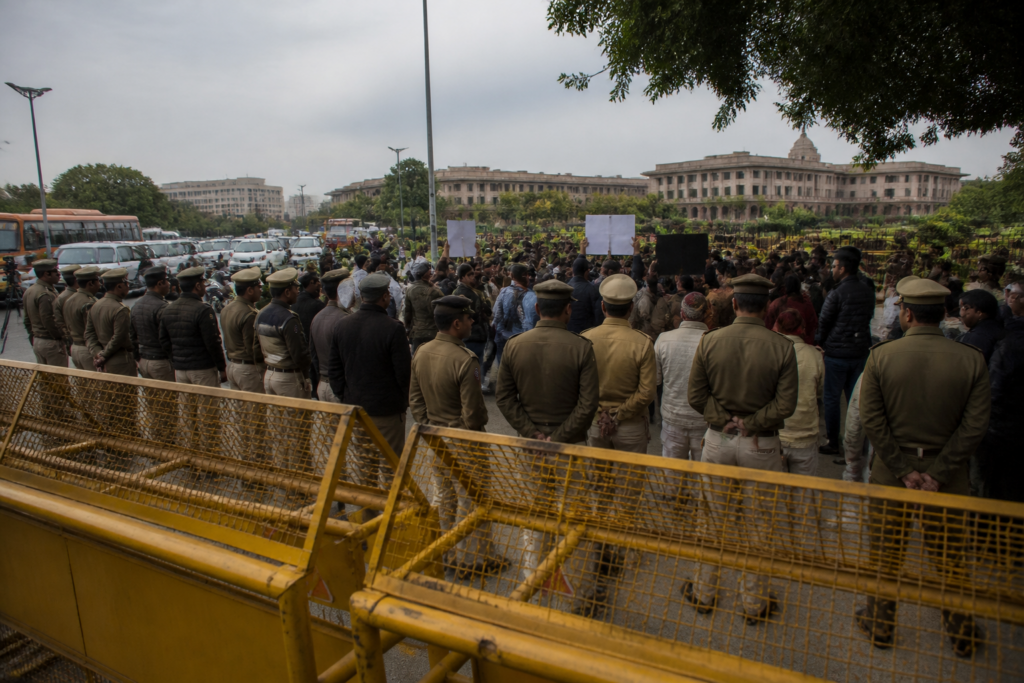
Two leaders of the Cockroach Janata Party (CJP) were sent to Tihar Jail for five days after Delhi Police detained them during an unauthorised protest at Jantar Mantar, while party founder Abhijeet Dipke arrived in the capital and criticised the action.
Saurav Das and Ashutosh Ranka were produced before a Special Executive Magistrate on Wednesday and sent to judicial custody, according to the report. Ajinkya Shinde, who was also detained, was released on a bond of Rs 5,000.
Police said around 14 CJP members entered Jantar Mantar through a private premises on Tuesday morning, unfurled the Tricolour and raised slogans demanding the resignation of Chief Election Commissioner Gyanesh Kumar. The police described the gathering as unauthorised because Jantar Mantar had recently been de-notified as a protest venue.
The reported charges include violation of a peace bond, trespass and other offences. Police alleged that Das and Ranka had breached the conditions of bonds executed after they were detained on Saturday. The two had reportedly been released after furnishing bonds requiring them to maintain peace for one year.
Dipke reached Delhi within hours of the two leaders being sent to jail. Speaking to the media at the airport, he questioned whether unfurling the national flag had become an offence and compared the action with arrests during British rule. His remarks were also critical of Prime Minister Narendra Modi. The report said a person at the airport challenged him during the interaction, asking why he was damaging the country.
The case highlights the operational restrictions surrounding protest spaces in the capital. Jantar Mantar has historically been associated with demonstrations, but police action in this instance was based on the stated position that the location was no longer an authorised site for protests. The difference between a public place and a legally designated protest venue therefore became central to the arrests.
The report also places the arrests in the context of earlier proceedings involving the CJP. Dipke had travelled to his ancestral village in Maharashtra after his grandmother’s death during a CJP demonstration on October 10. He was released on bail after furnishing a Rs 50,000 surety bond and accepting a one-year peace condition.
The immediate next step reported in the case is the five-day judicial custody of Das and Ranka. The police allegations and the conditions attached to the earlier peace bonds will remain relevant to further proceedings.


