

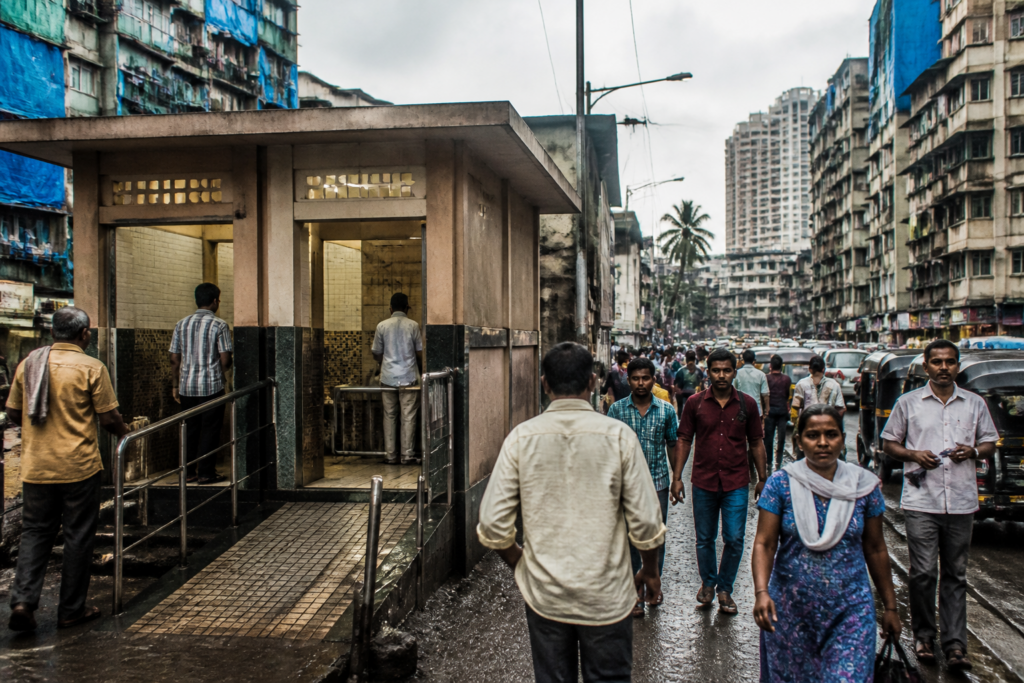
The Brihanmumbai Municipal Corporation’s proposal to charge Re 1 for urinals and raise public toilet fees from Rs 2 to Rs 5 has revived a question that Mumbai has faced for more than a century: whether sanitation should be treated primarily as a public service or as a facility financed by its users. The proposed increase is presented as a response to the cost of cleaning, repairs, water, electricity and caretakers. But its consequences will be felt most sharply by people who have the fewest alternatives, including daily-wage workers, pavement dwellers and residents of informal settlements.
The debate is not simply about a few rupees. It is about who pays for the infrastructure required to keep a dense city liveable, how that infrastructure is managed, and whether a user-fee model can maintain access without shifting the burden onto people who depend on public facilities every day. Mumbai’s own history shows that these questions have never been only technical or financial. They have also involved land, property values, class, religious sensitivities, neighbourhood politics and the city’s changing ideas of modernity.
## Mumbai public toilets have always been an urban governance question
Public urinals were part of Bombay’s civic infrastructure by the 19th century. Records from 1866 refer to 80 public urinals across the city. Their operation was linked to the sanitation systems of the time: waste was transported by train to areas including Sion and Kurla, where it was mixed with ash and vegetable matter before being dumped in salt marshes.
The outbreak of plague in 1896 made sanitation and overcrowding more urgent administrative concerns. The Bombay City Improvement Trust was established in 1898 to address unhygienic conditions in densely populated neighbourhoods. The institutional response reflected a basic reality of the colonial city: public health depended not only on hospitals or medical interventions, but also on how streets, housing and waste were managed.
Disputes over the location of public toilets soon showed that sanitation infrastructure could become a neighbourhood conflict. In 1913, property owners opposed a proposed public toilet at Thakurdwar in Girgaon, citing nuisance, possible effects on property values and the facility’s proximity to a temple. The municipal commissioner argued that the toilet was necessary because the area attracted large numbers of people and lacked an alternative public convenience.
Historian Mrunmayee Satam’s 2024 research paper, “Contesting the Toilet: Colonial Discourses, Elite Protests, and Religious Sentiments on Public Sanitation Infrastructure in Bombay City”, examines such conflicts. The episode demonstrates that the question of where sanitation infrastructure should be placed has long been shaped by who is expected to use it, who lives nearby and whose concerns receive administrative attention.
## Modernisation did not resolve the access problem
By 1921, municipal representatives were debating whether Bombay should build underground public conveniences on the lines of London. Above-ground toilets were viewed by some as an eyesore that did not fit the image of a modern metropolis. Supporters of an underground facility proposed one at Victoria Square, now Bhatia Bagh near Fort, ahead of the expected visit of the Prince of Wales in 1922.
The proposal also exposed a familiar distributional problem. Critics questioned the use of substantial public funds for underground conveniences in affluent areas while densely populated working-class neighbourhoods lacked basic sanitation. Some described the project as a waste of money, and it was never implemented.
The disagreement remains relevant because sanitation investment is not judged only by the technical quality of a facility. It is also judged by location, access and the population served. A highly designed or expensive facility in a prominent area cannot compensate for inadequate provision in neighbourhoods where residents have limited space for household toilets or where large numbers of people pass through each day.
After Independence, the sanitation challenge increasingly extended to informal settlements. Overcrowding and the lack of space made individual household toilets difficult to provide, increasing dependence on shared facilities. Public toilets were built under different schemes and managed by government agencies, private operators and community organisations.
## Community management offered a different model
A more participatory approach developed in the 1990s. In 1993, women pavement dwellers associated with Mahila Milan, working with the National Slum Dwellers Federation and SPARC, built a community toilet block on P D’Mello Road. It included four pour-flush latrines, a water tank and a caretaker’s room.
The model linked construction with local management. Rather than treating residents only as users of a municipal asset, it involved community organisations in the functioning of the facility. This approach was later expanded through the Mumbai Slum Sanitation Programme, implemented between 1996 and 2005 with World Bank assistance.
A 2006 World Bank Water and Sanitation Program report said that 330 community toilet blocks, containing more than 5,100 toilet seats, had been constructed and handed over to community groups for use and maintenance. The programme was estimated to have benefited around 4,00,000 people in Mumbai’s slums.
That history matters to the current fee debate because it shows that the city has used more than one institutional model to manage sanitation. Facilities have not always been understood as assets that the municipal corporation builds and operates alone. Community groups, non-governmental organisations and private agencies have also been part of the system, particularly where the challenge is not only construction but daily maintenance.
## The financial pressure behind the proposed increase
According to civic officials cited in the source report, Mumbai now has 846 public pay-and-use toilet complexes managed by private agencies and NGOs. The city also has around 8,173 community toilet complexes, of which 3,110 are managed by the BMC.
The operating responsibilities extend beyond opening the doors. Operators have to pay for cleaning, repairs, water and electricity, as well as caretakers. The proposed increase is intended to help meet these rising expenses, with the additional revenue retained by the operators.
This arrangement makes the user charge part of a larger contracting and maintenance system. The question is not only whether Re 1 or Rs 5 is affordable to an individual user. It is also whether the revenue collected is sufficient, transparently accounted for and linked to measurable standards of cleanliness, water availability, repair response and opening hours. The supplied material does not establish how the proposed revision would be monitored or whether the BMC has published a detailed cost and performance framework.
The figures also show the scale of the management challenge. The BMC manages only part of the city’s community toilet network directly, while private agencies, NGOs and community groups operate other facilities. Responsibility is therefore distributed across several types of institutions. That can bring operational flexibility, but it can also make accountability harder for users to understand when a toilet is closed, poorly maintained or short of water.
## Why small charges can have large consequences
For many city residents, a fee is an occasional expense. For people who rely on public toilets multiple times a day, it becomes a recurring cost. The source report specifically identifies daily-wage workers, pavement dwellers and others dependent on public toilets as groups likely to feel the increase in their everyday expenses.
This is the central tension in Mumbai’s sanitation model. The facilities require continuous spending, but the people most dependent on them may have the least capacity to absorb higher charges. A public toilet can therefore be financially inexpensive to operate only if cleaning, repairs and staffing are underfunded; but when those costs are recovered from users, the service becomes less affordable for the people who need it most.
The historical record also cautions against treating sanitation as a narrow facilities-management issue. In colonial Bombay, public toilets were connected to plague control, overcrowding and urban improvement. In post-Independence Mumbai, community toilets were connected to informal settlement conditions, limited land and collective management. Today, the proposed fee changes connect sanitation to municipal contracting, operating costs and household-level affordability.
The evidence supplied in the report does not show whether the proposed charges have been approved, when they would take effect or whether exemptions or subsidised access are being considered. It also does not establish whether the BMC has evaluated the impact on usage patterns or on residents who cannot rely on private toilets. Those are important details for assessing the policy beyond the headline figures.
Mumbai’s public toilet debate ultimately reveals a basic feature of urban infrastructure: construction is only the beginning. The city must also fund cleaning, water, electricity, staffing, repairs and oversight over the life of the facility. The current proposal makes those recurring costs more visible, but it also raises the question of how a city can protect universal access while keeping a large and decentralised sanitation network functional. The next stage of the BMC’s proposal will determine whether the fee increase is accompanied by clear operating standards, public accountability and safeguards for residents who have no practical alternative.


