

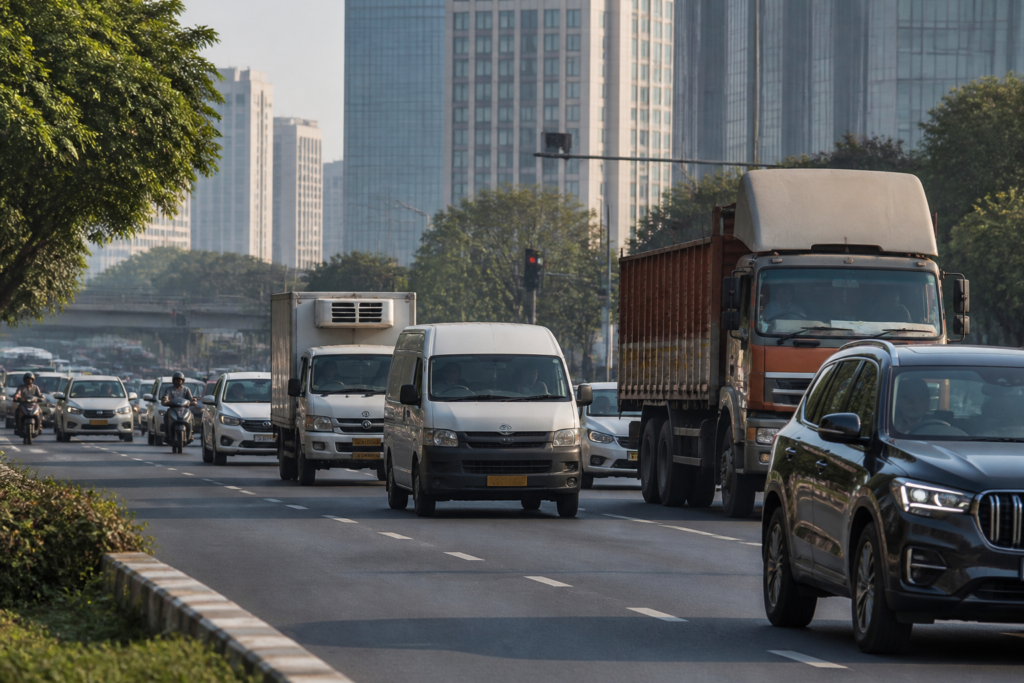
India is set to introduce BS-VII emission norms for new cars and SUVs from April 2029, followed by small goods delivery and pick-up vans from April 2030 and heavy-duty vehicles from April 2031, according to a senior government official cited by PTI.
The proposed rollout will extend India’s vehicle-emission controls across passenger vehicles and commercial fleets in phases. The official said the road transport and highways ministry has approved the proposed guidelines and that draft notifications are expected this week.
The new standards are expected to fully align with Euro 7 norms, according to the official. BS-VII will therefore become the next major step in India’s effort to limit pollutants from road transport, although the supplied announcement does not specify the final pollutant limits, testing procedures or compliance requirements for manufacturers.
Bharat Stage standards set limits for pollutants including carbon monoxide, nitrogen oxides, hydrocarbons and particulate matter. These pollutants are significant components of vehicle emissions and are particularly relevant to cities, where large numbers of vehicles operate in dense traffic and alongside homes, workplaces and public spaces.
Under the announced schedule, new cars and SUVs will be covered first from April 2029. Small goods delivery vehicles and pick-up vans will follow a year later, in April 2030. Heavy-duty vehicles, which include larger commercial vehicles, are scheduled to come under the standards from April 2031.
The phased approach separates passenger vehicles from different categories of commercial vehicles rather than applying the requirements to the entire new-vehicle market at once. The announcement does not state whether the schedule will apply to all newly sold vehicles on those dates or identify any transition arrangements for models already in production.
India has enforced BS-VI emission norms since April 2020. The country moved directly from BS-IV to BS-VI after skipping BS-V, a decision intended to accelerate reductions in vehicle pollution. BS-VI vehicles emit substantially lower levels of pollutants than vehicles built under earlier standards and use low-sulphur BS-VI fuel.
The transition to BS-VII will affect more than vehicle certification. It will also require manufacturers to align new vehicle designs and testing systems with the final rules, while the timetable for vans and heavy-duty vehicles will determine how commercial fleets respond to the next regulatory change. The supplied announcement does not provide estimates of compliance costs, vehicle prices or the effect on existing vehicles already on the road.
The immediate next step is the publication of the draft notifications, expected this week. Those documents will establish the detailed requirements, implementation provisions and testing framework for the proposed BS-VII rollout.


