

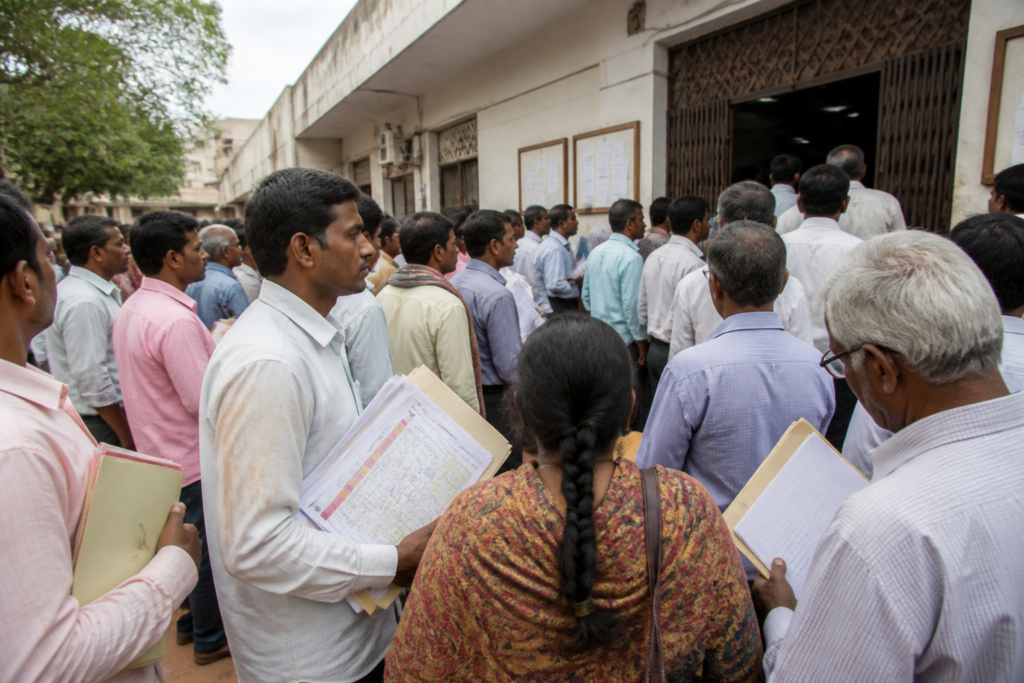
The Telangana BJP has alleged large-scale corruption in the use of the 22-A prohibited land list, claiming that lakhs of acres, including agricultural land, are being placed under restrictions and that affected landowners are facing uncertainty over their ownership rights.
BJP Telangana president N. Ramchander Rao made the allegations while addressing the media on Thursday. He said people who had possessed land for 20 to 30 years were suddenly finding their properties included under Section 22-A of the Registration Act.
Rao alleged that the process of adding land to the prohibited list, and later removing it, had created scope for bribery. He referred to recent arrests by the Anti-Corruption Bureau of revenue officials allegedly demanding bribes, linking those incidents to the difficulties faced by landowners seeking clarity and relief.
According to Rao, affected residents and farmers were making repeated visits to collector offices to resolve disputes relating to the list. He cited concern among farmers in Bomraspet of Shamirpet mandal, where about 1,500 acres were reportedly included in the prohibited list.
He also claimed that similar problems were being reported in Banjara Hills and Jubilee Hills. In these cases, he alleged, the presence of even one government plot within a survey number was resulting in the entire survey number being restricted. Such restrictions can affect a landholder’s ability to register or transact property, although the supplied report does not provide details of the specific orders or survey records involved.
Rao alleged that the restrictions were causing losses for poor and middle-class landowners while benefiting influential individuals and builders. He demanded greater transparency in the process of adding or removing land from the 22-A list and called for relief for affected owners.
The allegations place the issue within a wider administrative problem: the way land records, prohibited-property lists and registration procedures are applied can have consequences well beyond individual ownership disputes. A restriction affecting an entire survey number can potentially involve multiple landholders, making access to records and a clear appeals process important for resolving claims.
Rao said the Congress government must answer for the issue. The report does not include a detailed response from the state government or revenue authorities to the allegations, nor does it establish the number of properties or acres officially added to the prohibited list.
The BJP leader also raised separate concerns about irrigation water and electricity supply, alleging that farmers dependent on borewells were receiving only two to three hours of reliable power and that crop damage and drought-like conditions were resulting. He further claimed that power cuts were affecting towns. These claims were also made by Rao during the media interaction and were not accompanied in the report by an official response or independently verified figures.
The immediate administrative questions are whether affected landowners can obtain clear reasons for restrictions, how survey-level entries are reviewed, and what procedure is available for correcting an alleged error. Rao called for transparency in both adding land to and removing it from the 22-A list, but the report does not specify any new government review or timeline.


